








































Why Customer Segmentation is Crucial for Your Restaurant
 Sapaad Content Team

Defining a target market is one of the most challenging aspects of starting a restaurant business. You have to nail down specific data points to ensure that your brand appeals to the right audience. Without a target market, your marketing strategies are likely to fail, and your brand won’t have a distinct identity and image.
How do you even gather all the data to target a market? Market or customer segmentation is key. It’s the process that helps you determine every relevant detail about your ideal customers, and how they differ from one another. But it doesn’t stop at the market’s demographics—like income, age, and gender—customer segmentation also looks into their location, shopping habits, food preferences, dislikes, and other factors.
Let’s go over how customer segmentation works and its impact on your restaurant.
What is Customer Segmentation?

As mentioned above, customer segmentation identifies specific details about your market. These details form the basis of the segments, which allow you to create customer profiles.
These are the details that help you form customer segments:
- Demographics
Think of demographics as the “basic” type of customer segmentation. They break down the market into several general categories, such as:
- Age
- Gender
- Income
- Occupation
- Educational level
- Religion
- Ethnicity
Targeting Gen Z or millennials is an example of segmenting customers according to age. From there, you can determine the average gender of the particular segment you want to target, then go into their income bracket, occupation, and so on and so forth.
- Psychographics
Psychographic factors explore your potential customers’ interests and personalities. The factors you can identify include, but are not limited to:
- Lifestyle
- Hobbies
- Beliefs
- Values
- Personality traits
- Likes and dislikes
Identifying psychographic factors allow you to determine the type of customers who can relate to your brand. For example, if you want to open a space-themed cafe, then it will make sense to target the casual space nerd or astrophysicists. Your cafe can represent their hobby, craft, and everything that makes them who they are.
- Behavioral

Behavioral factors aren’t included in psychographics because they don’t necessarily deal with a customer’s personality and interests. Instead, they focus on spending habits, ordering preferences, and anything else that has to do with buying your product.
Behavioral segments can be dine-in customers, takeout customers, and delivery customers. Then you can break them down further by identifying their favorite dishes, modifiers (e.g., no spicy ingredients), and frequency of visits or ordering. In addition, you can classify between loyal customers, regular customers, and inactive customers.
- Geographic
As the name suggests, geographic segmentation refers to the targeting of customers based on their locations. It is one of the most crucial customer segments for restaurants, as location plays an important role in your success.
Besides a customer’s city or town, it’s necessary to determine other geographic factors, such as:
- Country
- State, province, prefecture, or territory
- County or region
- City or town
- Postal code
Geographical segmentation ensures that your marketing messages and promotions reach the right places, helping you boost foot traffic or food deliveries within your area of business.
Now that we’ve defined customer segmentation, let’s compare customer segments and a target market.
Customer Segments vs. Target Market
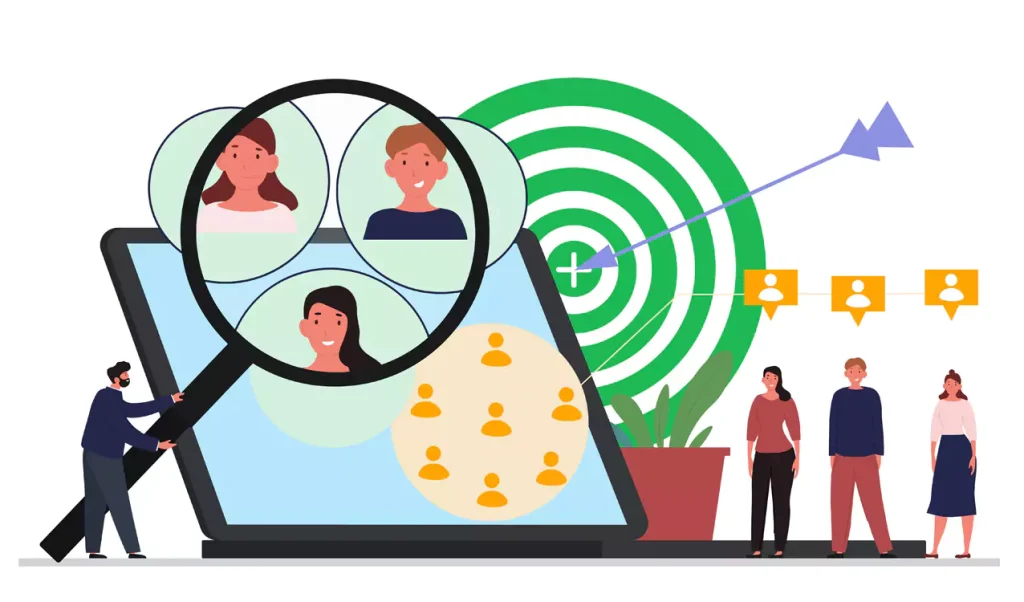
Customer segments bear some similarities with a target market. The simplest way to differentiate them is to remember two keywords: macro and micro. Customer segments are a breakdown of customers at a macro level, because you have to study the entire market before dividing them into different segments. In contrast, a target market defines customers at the micro level, because by then, you’d have already chosen a segment to sell to.
Basically, the customer segments you’ve created won’t necessarily be your target market. Instead, they merely narrow down the market to help you find the niche you want to sell to. That niche will be your target market, who will be the main audience of your marketing campaigns.
How Customer Segmentation Impacts Restaurant Sales and Bottomline
Customer segmentation gives you a clear and measurable target market. It prevents you from generalizing your customers and sending aimless marketing messages. Even if market segmentation results in having a small target market, you can analyze that segment’s data to determine how big it’d grow in the future, allowing you to plan marketing campaigns that are also designed for growing your business.
In addition, customer segmentation helps you identify which channels to use to access your target market. For example, if you’ve targeted Gen Zs who regularly order food via food delivery apps, then you can sell your dishes on those apps and avoid wasting money by commissioning platforms your target market doesn’t use.
Overall, customer segmentation makes your Calls-to-Action (CTA) effective, resulting in sales and profit, assuming your costs are in control. Even if your social posts and online ordering channels are technically visible to anyone on the Internet, they can capture your target audience, thanks to the algorithm. Since the Internet tracks all of our data, such as our browsing, buying, and search histories, the customers whose online activity is relevant to your business are highly likely to come across your platforms and heed your CTA.
However, direct messages may be more effective than targeted social posts or digital ads. Unlike those two, direct messages can be personalized for every customer or customer segment; plus, they’re more likely to be read. According to Campaign Monitor’s research, email open rates reach 25%, with click-through rates at 3%. On the other hand, only around 6% of users will see a Facebook post on their timeline.
Still, it’s crucial not to put your eggs in one basket when choosing a marketing platform. Spread your campaigns across all relevant platforms to increase your chances of pulling in sales.
Use Customer Relationship Management for Accurate Customer Segmentation
Customer segmentation is just as difficult as target marketing, if not more. At least, with target marketing, you already have a marketing roadmap and know exactly who you’re going to woo. On the contrary, customer segmentation urges you to painstakingly pick the market apart until you find your ideal customer.
Plus, it doesn’t stop when your business is up and running. As a restaurant owner, you need to keep studying your customers’ behaviors to ensure that your marketing strategies will stay effective.
Thanks to the Internet and other digital tools, identifying your audience and dividing them into relevant data segments has become easier than ever. But on top of that, you need a system for analyzing your customer data, which is customer relationship management.
CRM manages and analyzes customer interactions and data, with the goal of increasing sales and customer retention rates. Nowadays, it’s usually facilitated by restaurant CRM software, which records customers’ ordering histories (including favorite dishes, beverages, and modifiers) and contact information. As such, you can determine your customers’ ordering frequencies, spending habits, and preferred methods of ordering.
However, despite having technological assistance, don’t forget to speak with customers yourself. You can get their feedback either verbally or in writing, or online if that would be more convenient. Customer feedback is one of the most invaluable tools for marketing and improving your business. Not to mention, the best insights are often drawn from organic conversations.
Sapaad Content Team
Author

Related Blog Posts




















Get the latest news and updates
Submit your email address to join our email list.