



















































Cracking the Code: Increasing Restaurant Profitability with LIVE BI Dashboards and Menu Engineering
 Sapaad Content Team

There are many challenges that come with running a restaurant business, from effectively managing inventory to ensuring consistent customer satisfaction, the list goes on. In fact, the cost of food is another pressing concern for 92% of restaurant operators according to a research by the National Restaurant Association. One strategy that can help combat this challenge is menu engineering—a methodical approach involving analysis of menu item performance and categorization based on popularity and profitability.
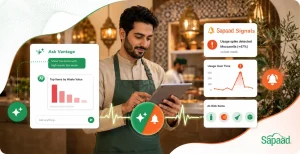
Thankfully, LIVE BI Dashboards offer menu engineering reports, enabling informed decision-making to effectively address challenges posed by rising food costs and optimize menu composition. In this article, we’ll delve into how menu engineering can help manage the challenge of rising food costs while maximizing overall profitability in restaurants.

Profit maximization
Menu engineering allows you to identify high-margin and popular dishes by categorizing menu items based on both popularity and profitability. Knowing this helps you promote and strategically price these items, thereby maximizing overall profitability.
Take, for example, your restaurant’s seafood pasta as a popular dish with high profitability. You can showcase it more prominently in your menu and adjust the price slightly, maximizing profits while keeping customers satisfied.
Cost control
Menu engineering helps in identifying low-margin or underperforming items. By either reworking or removing such items, you can control costs and focus on menu offerings that contribute more positively to your bottom line.
For example, you discover that your beef burger with premium ingredients yields low profit margins. With this information, you can work on tweaking the recipe slightly, maintaining its quality while reducing ingredient costs.

Strategic pricing
Data-driven decisions through menu engineering can guide adjustments to pricing. You can strategically set prices based on both customer preferences and the cost of ingredients, finding a balance that ensures profitability while remaining attractive to customers.
Operational efficiency
Streamlining the menu based on menu engineering principles can lead to operational efficiency. A simplified menu can make it easier for kitchen staff to manage inventory, reducing waste and improving overall efficiency.
For example, your cafe’s extensive menu leads to difficulties in inventory management, resulting in increased food waste. Through menu engineering, you can streamline your menu by removing less popular and low-margin items. This simplification allows you to better manage inventory, reducing waste, and improving overall operational efficiency.
Enhanced customer experience
Optimizing menus through menu engineering also contributes to a better dining experience. Restaurants can positively influence their customer’s choices and satisfaction by promoting customer favorites and strategically placing items.
For example, if your menu engineering report categorizes your sushi platter as the most-popular dish in your restaurant, you can place it at the top of your menu and tag it as a “Bestseller” or “Chef’s Recommendation” and have enticing photos of the dish for customers to see. This creates a compelling visual and informational cue, enticing customers to choose the highlighted sushi platter and, in turn, elevating their overall dining experience.
LIVE BI Dashboards that provide a Menu Engineering report can transform the way you deal with several restaurant challenges, particularly when it comes to balancing food costs and profitability. It’s more than just an investment in technology; it’s an investment that can help drive the future success of your restaurant.
Sapaad Content Team
Author

Related Blog Posts



















Get the latest news and updates
Submit your email address to join our email list.