













































How to Respond to Customer Feedback: The Do’s and the Don’ts
 Mirash T

You may have everything that it takes to make your restaurant a huge success – great food, exemplary customer service, accessible location, and affordable prices. However, if you are not collecting customer testimonials, you are missing out on great opportunities to market your restaurant and take it to the next level.
If you are a restaurant owner looking to grow and scale your business, customer feedback is a great place to start. With widespread use of social media and the Internet, feedback has become social proof of a restaurant’s worth.
Apart from being social proof, your customers and their feedback can be the greatest source of learning for you as a business owner. For example, it is obvious that if you are operating a QSR, the #1 goal for you to achieve is quick service and little to no wait times.
But say, due to this quick service, that your restaurant cannot focus on giving customers their favorite add-ons or customized options. Your food may be too spicy or too salty to a majority of your customers.
What is the best way to pick up on any of these details and, more importantly, use this information to give the customers what they want?
Customer feedback.
Customer feedback is the single most important tool to truly become a restaurant that puts its customers first. Showing customers you truly value their experience, time, and money spent at your restaurant can be one of the best ways to market yourself.

Apart from customer feedback helping restaurant owners improve customer satisfaction, it helps owners make informed business decisions, meet customers’ ever-changing needs, and improve brand loyalty.
So the next time a customer walks into your restaurant, ask yourself how you can receive that much-needed feedback. While it is important to collect feedback, what’s even more crucial is how you react to the feedback and use it to improve your restaurant offerings.
We’ve put together a guide for restaurants to help them tackle customer reviews – both good and bad – and how to apply any criticism or praise to improve your restaurant operations.
How To Handle Positive Reviews
While it might seem imperative to respond to negative feedback, it is just as important to respond to the positive reviews that customers send your way. This gives the impression that the restaurant is truly appreciative of its customers’ feelings and experiences that they’ve had at the restaurant.
Positive reviews are your restaurant’s loudest marketing tool. Customers who sing praises of your food and services are also the ones who can convince other customers to check out your restaurant. Thanking customers who leave you positive reviews with offers, rewards or discounts is a great way to encourage loyal, repeat customers.
So how do you respond to positive reviews, and more importantly, how can you use these positive reviews to promote your restaurant?
We’ve laid out a few steps you can take to achieve maximum leverage over your positive reviews.
Thanking the customer for their review
Bad experience with a restaurant almost always guarantees a bad review online. However, if a customer has taken the time to leave a positive review, it holds more weight and value for a restaurant.
Thanking the customer for a positive review is extremely important, as they will feel appreciated and heard. Responding swiftly shows them that you regard them and their opinions. It indicates that you wish to hear from them and are always looking for ways to improve your service.
Rewarding the customer for their review
Sometimes, simply saying “thank you for your feedback” does not cut it. Even though your customers might not necessarily be looking to be rewarded for genuinely positive feedback, it will make them feel valued and increase the chance of repeat business.
Offer your gratitude first, followed by a small surprise – like a discount coupon or a free goodie the next time they dine at your restaurant. Customers are now more than likely to mention your business to their friends and family, encouraging positive word-of-mouth(WOM) marketing.
Rewarding the staff responsible for the review

Take a moment to acknowledge that positive customer feedback is the joint effort of all of your employees. From providing good customer service to great food and ambience, there are many ways your restaurant staff contribute to a great dining experience.
If customers have explicitly mentioned staff by name, and this particular staff member’s name keeps popping up, make sure to reward them for their hard work, and to keep it up.
Monitor your employees’ performance closely and provide them financial incentives based on on their success and customer feedback. This will make your employees feel valued and motivate them to provide excellent service on a consistent basis.
Personalizing your message
Personalization and customer satisfaction go hand and hand. If a customer notices you have replied to all of your positive feedback in the same way, they might feel like they are interacting with a bot or that their comment was not truly appreciated.
Simply addressing customers by their name and saying thank you in different ways can already make them feel more connected to your restaurant and leave them with an increased sense of satisfaction.
Use positive reviews as content
Good customer feedback acts as great social proof, but it can also be leveraged as effective marketing content for your social media pages.
It can be as simple as resharing a customer’s story or post about your restaurant, posting a screenshot of the review, or something more strategic as posting the review with a clear CTA button, prompting new customers to come to try your restaurant.
Restaurants can even offer promote social media offers for genuine customer feedback, such as 5% discounts for the first 50 people who comment on a particular post. It increases engagement, promotes your content, and is overall a great marketing tool on top of the glowing review.
Now that we’ve seen how to handle positive reviews, let’s take a look at the flip side of customer feedback: negative reviews.
How To Handle Negative Reviews
Restaurant diners search online for restaurant reviews on sites such as Yelp, TripAdvisor, and Zomato to determine whether or not to patronize a particular restaurant. And many of them have become accustomed to writing and posting restaurant reviews for other diners to see.
Get this: while some studies say it takes 12 positive reviews to counteract one negative review, it may actually take up to 40.
Online reviews have an undeniable role in pulling in or pushing away clients from your restaurant. Compared to positive reviews, negative internet reviews impact a restaurant’s reputation and revenue a lot more. This creates a necessity to respond and rectify these situations as quickly as you can.
We’ve detailed a few of the major Do’s and Don’ts of responding to negative reviews that any restaurant might have to face in its journey.
The Biggest Do’s and Don’ts of Responding To Customer Reviews
❌ Don’t: Take too long to respond
To respond to bad reviews quickly, you need to keep track of all of your reviews across platforms like Google or Yelp.
Don’t forget to monitor comments and review feedback on your social media channels, like Facebook, Instagram, and Twitter.
✅ Do: Apologize and take responsibility
The first thing to do is to reply cordially to the customer. Start by thanking them for taking the time to leave you a review from which you can learn.
Sincerely apologize for the inconvenience that was caused to them and assure them you are going to rectify the situation as soon as you can. If it was a problem that could have been avoided, you can explain what caused it and what you will do to make sure that it does not happen again.
Finish the message by thanking them again, and encouraging them to visit again so that you can make things right.
❌ Don’t: Defend yourself or use passive-aggressive language

When you receive a bad review, you might get defensive about your restaurant and want to defend yourself.
However, doing any of these things will leave a bad taste in the reader’s mouth. You should not jump at the next chance to write a long, emotional message to a negative review, so click pause for a while and take a breath to analyze what went wrong.
✅ Do: Invite them again to change their mind, or offer a solution or incentive
When customers have a bad experience at the restaurant, let them know that you are keen to fix the problem. Invite them to your restaurant again and make them truly feel like the customer is valued.
You could also offer incentives or discounts to your customers to set things right again. Encourage them to visit your restaurant to give you a chance to change their minds.
❌ Don’t: Say sorry and leave it at that
As a restaurant owner, you should be able to differentiate a one-time negative review versus an issue that keeps popping up.
Apologizing to your customers constantly for a problem that could be identified and fixed should be the main goal for any restaurant.
✅ Do: Fix the problem
Address anything the reviewer complained about. If they believed the service was too sluggish, talk to your team about ways to reduce customer wait times. If there was an error with their food, let the kitchen workers know so that they may be extra careful not to make the same mistake again.
If these long wait hours and mistakes keep happening often, you might want to consider an effective restaurant management solution that can improve your operational speed, efficiency, and accuracy.
❌ Don’t: Delete bad reviews
Do not try to delete bad reviews as that might contribute to more bad reviews about you deleting the bad reviews. Be rational and not emotional in your reaction to criticism.
Every piece of feedback is an opportunity to learn and progress.
✅ Do: Combat bad reviews with more good reviews

Instead, you can combat bad reviews with more good reviews by asking customers who had a great experience at your restaurant to leave a positive review or a 5-star rating.
The more you up your service and keep your customers happy, the more likely you are to see more positive than negative reviews.
❌ Don’t: Take it personally
Always keep in mind to not take a bad review personally and let it affect you.
Any single unfavorable remark or review should not be interpreted as a typical view of your restaurant. Always regard unfavorable evaluations as learning opportunities for you as a business owner. Don’t let one or two bad remarks derail your efforts in the face of numerous positive ones.
✅Do: Remember that not all bad reviews are the restaurant’s fault
Evaluate if the criticism has merit, or if it is based off a customer’s subjective opinion or biased point-of-view. Sometimes, not all bad reviews are the fault of the restaurant.
Consider the critique and assess whether or not it is valid. If there is a genuine problem with your product or service, you should focus your efforts on resolving it. Concentrate on the specific measures you must take to handle the problem. This might be dealing with a single consumer or making more fundamental modifications to your product or service.
❌ Don’t: Leave room for a bad review
As a restaurant owner, you should be doing everything in your power to make sure that you do not leave any room for customers to find a fault in your service, hygiene, or your food.
✅ Do: Your best to stay at the top of your game
Ask yourself, how, as a restaurant owner, can help your business stay on top and beat out the competition.
One of the first steps is to identify the needs of your customers. Do they demand quicker service? Are they interested in a loyalty program that lets them collect points that they can redeem for cash?
How about a fully automated inventory management system that notifies you when an item is soon about to be out of stock so that the chef never has to 86 an item? Or are you finding it hard to view your accounting data, and have no idea how your business is doing on a day-to-day, weekly or monthly basis?
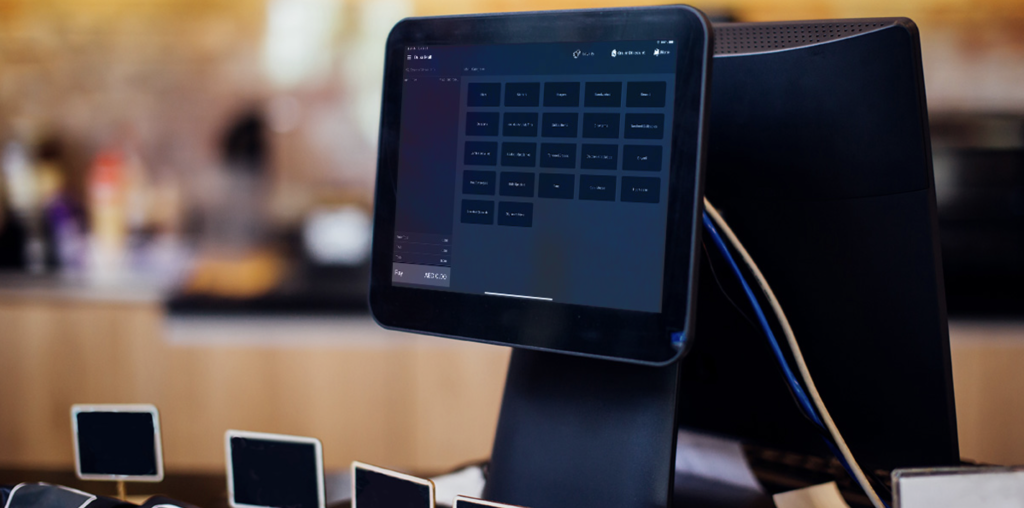
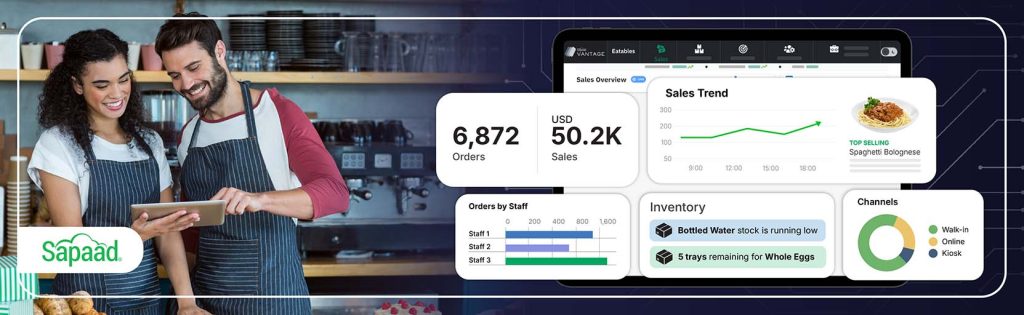
The solutions to all of these problems lie within a cloud-based POS system that comes fully integrated with a Kitchen Display System, Delivery Manager, Business Dashboard, Online Order Management System, and even an app for your waiters to help them work at maximum efficiency and speed.
With such a system in place, rest assured that your restaurant is always going to be at the top of its game, leaving much less room for errors or bad reviews.
The Takeaway
A Harvard Business School survey has found that a simple 1-star review increase on Yelp.com helps restaurants boost their revenue by 5-9%. So imagine the power of feedback, and how when it is rightly harnessed, can be used to make positive changes in restaurant operations and solidify your position as a key player in the competitive F&B industry.
The value of customer satisfaction for restaurants is universal. It may make or break a restaurant’s business, independent of its size, location, demographics, or even food quality.
The happier your customers are, the more likely they are to spend more, return, share their great experiences, and suggest restaurants to friends, family, and strangers online.
Mirash T
Author

Related Blog Posts
























Get the latest news and updates
Submit your email address to join our email list.