
















































Analyzing Your Menu Items’ Profitability With Restaurant Business Intelligence
 Nickie Desiderio

As a restaurant owner, you know how crucial it is to create a menu that appeals to your customers and drives profits. But how can you tell if your menu does just that?
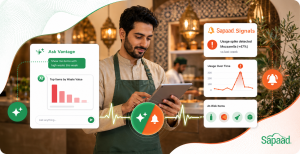
The answer may lie in your restaurant management system; if your modern POS is integrated with real-time restaurant business intelligence data, you can gain valuable insights into your menu’s performance anytime, anywhere.
What’s more, advanced restaurant analytics can aid you in menu engineering, which is the process of designing an appealing and profitable menu.
Let’s explore how to analyze your menu to identify high and low-profitability items and how to make informed decisions about pricing, placement, and menu design.
Identifying High-Profitability Items

A high-profitability item has a low food cost percentage and a high menu price. These items have a higher profit margin and generate more profit with each sale.
High-profitability items have a food cost percentage of around 25% or lower. You can identify an item’s food cost percentage by looking at your restaurant analytics or inventory management data; they show the cost of all your recipes and ingredients. Divide that number by the revenue a dish makes. For example:
- Chicken breast: $2.50 per portion
- Rice: $0.50 per portion
- Vegetables: $0.75 per portion
- Spices: $0.25 per portion
The total cost of the ingredients for one portion of this dish is $4.00. If you sell this dish for $12.00, your food cost percentage would be 33% ($4.00 / $12.00).
However, you should focus on more than just high-profitability items. Track both high-profitability items and bestsellers in your restaurant business intelligence to create a well-balanced menu.
Menu Placement and Design
After identifying your high-profitability items, find out where they are on your menu. If you follow the principles of menu engineering, high-profitability items should be prominently displayed and placed strategically to catch your customers’ attention. You could put them at the top of the menu, in a separate section, or use visual cues like images or bold text to draw attention to them.
You should also consider how your menu is designed. A well-designed menu can increase sales of high-profitability items. For example, grouping similar items, like appetizers or entrees, can make it easier for customers to find what they’re looking for and encourage them to order more.
Identifying Low-Profitability Items

Low-profitability items have a high food cost percentage and a lower menu price. While they may be popular with customers, they can eat into your profits, and some may not be worth keeping on your menu.
Using restaurant business intelligence data, analyze the performance of low-profitability items on your menu. If they’re not selling well, you may need to reevaluate their value to your restaurant and customers. On the other hand, if a crowd favorite is a low-profitability item, perhaps its low profit margin isn’t justified; consider upselling it by bundling the item with a high-profitability option.
Why Restaurant Business Intelligence is a Game-changer in Menu Analysis

Restaurant business intelligence tools help you track sales data, inventory levels, and other metrics to understand better which menu items are driving profits for your business.
A fully-integrated restaurant management system can provide this tool for you. It makes restaurant analytics data from your outlets accessible anytime, anywhere. You can analyze your menu wherever you may be, allowing you to quickly decide on menu pricing, item placement, and design to maximize profits.
Analyzing your menu is essential for driving profits for your restaurant. With real-time restaurant insights at your disposal, you can track sales data and identify areas for improvement in your menu. In no time at all, you can create a profitable and successful menu for your restaurant.
Nickie Desiderio
Author

Related Blog Posts






















Get the latest news and updates
Submit your email address to join our email list.