










































Restaurant Marketing Budget: Rules and Techniques
 Mirash T
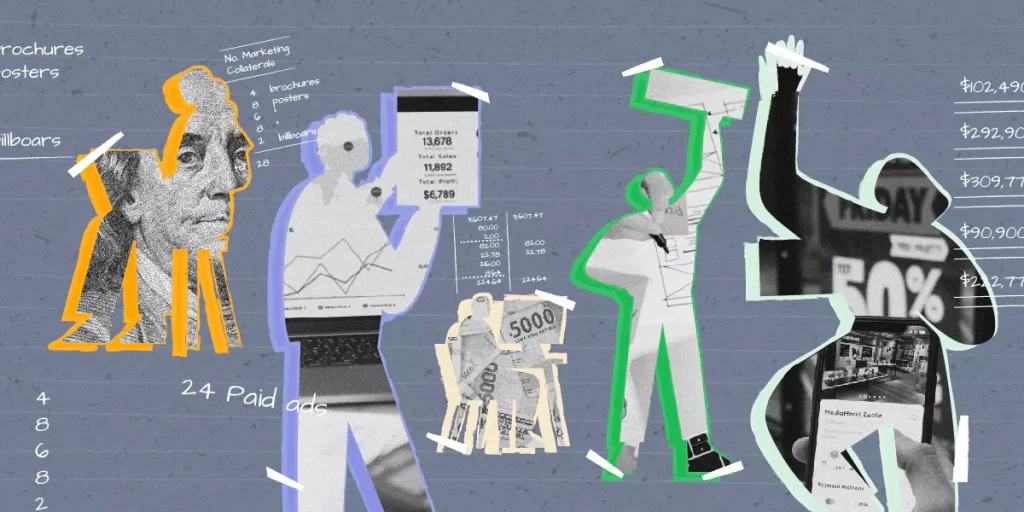
Marketing is essential for your restaurant’s success. Without a marketing plan, attracting customers and making sales will be extra challenging. Yet, many restaurant owners—especially new ones—may not know how much money to invest in marketing.
There is no one-size-fits-all restaurant marketing budget. Some big QSRs may spend up to 50% of their gross revenue on marketing, while small, local diners may only have 3% to spare.
Your restaurant marketing budget should depend on your gross revenue, the size of your business, its age, and other factors. We’ll help you get started by explaining the ideal marketing budget for restaurants and how to manage it.
Restaurant Marketing Budget Rules

As a general rule, restaurant marketing budget is around 3-6% of gross sales. Spending under 3% may seem justified if you’re tight on sales, but underinvesting can slow down your restaurant’s success.
If it’s currently impossible for you to increase your marketing budget, investing more time and effort may do the trick. There are many zero-budget marketing strategies to try, like using social media or optimizing your website. If you have an online ordering page, you can also re-engineer your menu to make high-profit items more attractive.
However, if you’re getting a lot of sales yet still underinvest in marketing, reconsidering would be wise. It may be easier for you to increase your budget and make your campaigns work with a steady stream of business.
Keep in mind that marketing is an investment; the more money goes into your restaurant, the more you should also be investing.
On the other hand, if your marketing budget is over 6% of your gross sales, you’re not necessarily overspending. Since big-name QSRs can spend way more and not feel a strain on their capital, a restaurant marketing budget of a little over 6% may be just right for you. If you’re experiencing a decline in sales, however, you may need to step back and re-evaluate your budget before launching a campaign.
There’s one good reason not to spend more than 6% of your sales on marketing: you could be banking on only a few marketing campaigns and nothing else.
Track your campaign’s results by monitoring your real-time sales, SEO, and social media engagement. If your sales and online engagement increase every time you launch your campaign, your marketing budget is justified. Also consider dividing your budget to give other marketing strategies a chance.
For example, if you heavily promoted on-premise dining perks before the pandemic, and you suddenly had to resort to off-premise services, your campaign would be ineffective if you hadn’t prepared a campaign for home deliveries.
Restaurant Marketing Budget: Capital Expenditure or Operating Expense?

Many restaurant owners often get confused over whether marketing is a capital expenditure (CAPEX) or an operating expense (OPEX).
As an investment that will benefit your business in the long term, marketing should definitely be considered a CAPEX. This is true even if you’re only spending for a short-term campaign (e.g., Mother’s Day, Christmas, and other seasonal offers).
That’s because CAPEX refers to purchases that are meant to improve your restaurant’s performance. So whether your campaign is for the long term or a specific holiday, they have the same goal, which is to help increase your sales.
OPEX, on the other hand, are costs incurred for day-to-day operations. Examples include rent, utilities, salaries and wages, legal fees, and interest paid on debt. Simply put, OPEX keeps your restaurant running, while CAPEX ensures that you can fulfill your KPIs.
By viewing restaurant marketing as CAPEX, you will protect your budget, especially during tough times. Since a restaurant’s marketing budget is usually the first to go during a decline in sales, treating it as CAPEX will help you focus on cutting OPEX instead.
If, for instance, the pandemic has been slowing down your sales, you make up for it by reducing energy costs, excess inventory, and administrative expenses. This can help maximize your CAPEX, allowing you to increase your restaurant marketing budget.
Marketing is an essential investment. Avoid decreasing it especially when campaigns could benefit you the most.
Low-cost Restaurant Marketing Ideas
These low-cost marketing strategies can help you recover from a slow period or jumpstart your newly-opened restaurant:
- Social Media
Being active on social media is no longer an option but a must. By posting content regularly, you can engage with your audience more and even drive online ordering.
You can use hashtags to reach out to a wider audience. Including your location when you post also helps; your post can reach potential customers in nearby areas, encouraging them to order online or visit your restaurant.
- Your Own Website

If you can create your own website in addition to partnering with food aggregators, it will significantly help level up your marketing efforts. Buying your own domain lets you leverage search engine optimization (SEO), which makes use of relevant keywords to drive traffic to your website. If potential customers search for “best kebab restaurant in Riyadh” on Google, you want your website to top the list on the results page.
Though your social media pages can also rank high in search engine results pages (SERPs), customers may be more inclined to order if they see your website. US consumers prefer to order food delivery directly from a restaurant instead of using a third-party app.
- Email Marketing
Email may seem like a “formal” way to engage with customers, but it can actually be a secret ingredient for your restaurant’s success. As long as you don’t spam your customers, your email campaigns will help drive sales.
Emails are the best place to promote discounts, updates, and special offers since they allow you to attach media to your messages, unlike SMS. You can also send personalized greetings to your customers celebrating their birthdays. That will make them feel extra special and valued.
- Loyalty Program

You can give out cards which you stamp every time customers eat at your restaurant. But there’s now a more streamlined way to award loyalty points.
Consider an online loyalty program. Set up the loyalty system on your POS, and enrolled customers can automatically receive their points each time they order. It also works on dine-in orders, allowing you to ditch loyalty membership cards customers can’t use when ordering online or via phone call.
Deciding on a Restaurant Marketing Budget
Now that we’ve laid down the general rules and given you low-cost marketing ideas, let’s answer the question, “How much should my restaurant marketing budget really be?”
While we mentioned that allocating 3-6% of your gross sales for marketing is a good general rule to follow, this shouldn’t be set in stone. There’s no one-size-fits-all approach to setting a restaurant marketing budget.
In fact, if you’re in your first year of operations, it’s okay to spend up 25-35% of your gross sales on marketing. As a new restaurant, you need a stronger marketing campaign than your older competitors. If you have a lot of competitors, you may lean closer to 35% to get the most out of your campaigns.
If your business is already well-established and growing, your restaurant marketing budget may drop to 12-18% of your gross sales. You can ease on the promotions by this time, but don’t stop altogether. Lowering your marketing budget simply allows you to focus on increasing your profit margin.
For example, if you only have a 2% profit margin, it’s reasonable to spend 12% of your gross sales on restaurant marketing campaigns. But if there’s plenty of competition, stretching your budget to 15-18% may be necessary.
And if a slow season comes, it’s safe to allocate a more conservative budget of 3-10% of your gross sales for marketing. You’re not technically underspending, if your sales are lower during this time.
Determine the Right Restaurant Marketing Budget Through Your POS
Setting a marketing budget for your restaurant can take time if you have to compute your gross sales manually. And if you experience delays setting up your restaurant marketing budget, you may also delay in executing your marketing campaigns.
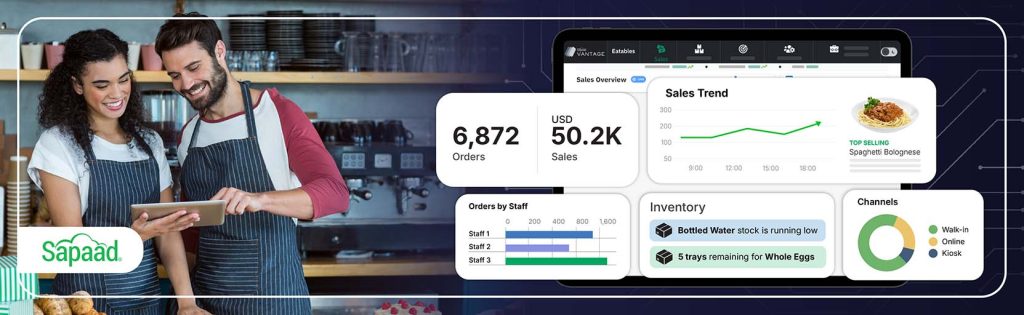
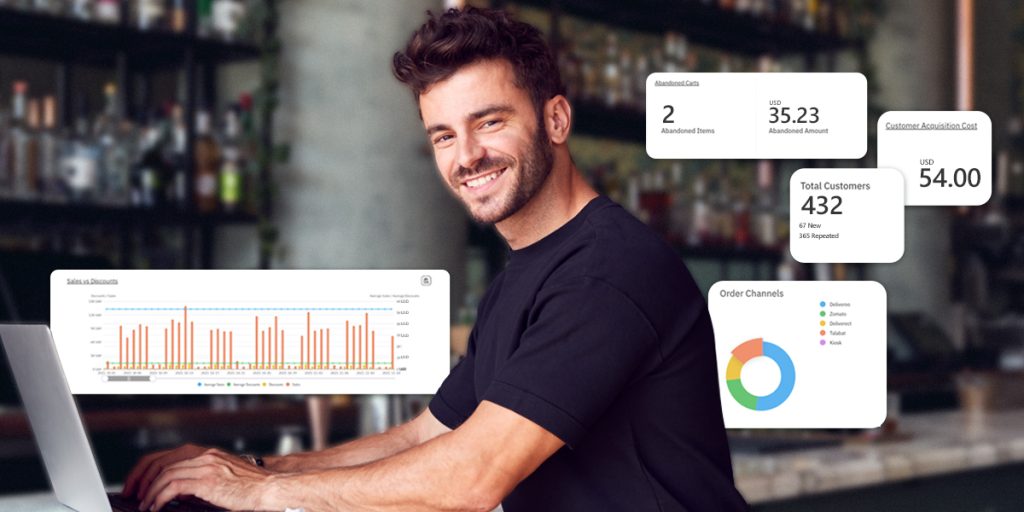
Getting the right POS system for your restaurant can make setting a marketing budget much easier. Consider a cloud-based POS system instead of a traditional one. You can integrate it with a business dashboard that displays your real-time sales. If you have multiple outlets, you can also view their individual real-time revenue.
With accurate knowledge of your sales and restaurant expenses, you can’t go wrong in determining a marketing budget that makes sense for your business.
Mirash T
Author

Related Blog Posts




















Get the latest news and updates
Submit your email address to join our email list.