













































8 Ways to Manage Your Restaurant’s Working Capital
 Mirash T

Managing one’s working capital is crucial for all restaurants. However, many restaurants, especially the new ones, are straining to meet daily operating costs, as well as increased demand for takeout and delivery.
Food service operations have been on the rise, jumping from 155,000 to almost 960,000 establishments over the last 40 years. This figure is again expected to spike as the COVID-19 pandemic’s effects recede, with employees returning to the office and students returning to school. They can give business to restaurants and pave the way for new dining establishments.
That’s definitely good news for restaurant owners, but without enough working capital, they may find it challenging to ride this tide.
Statistics reveal that 60% of restaurants fail within their first year, and 80% go out of business within five years. If your restaurant is struggling to manage your food service operations, how can you avoid the threat of closure?
Determining the right amount of working capital and maintaining it is key. Thankfully, doing just that is easier than you might think, and our guide can help get you started in no time.
What is Restaurant Working Capital?

Restaurant working capital is sometimes confused with restaurant capital. While the two terms have some similarities, restaurant capital is a broader category.
Restaurant capital refers to the amount you need to open your restaurant.
Restaurant working capital is responsible for sustaining your day-to-day operations.
Restaurant capital builds and outfits your restaurant, while working capital keeps your restaurant running.
Restaurant working capital consists of salaries, utilities, supplies, advertising expenses, and other day-to-day costs. The amount for each category depends on the size and type of your restaurant. A small, casual restaurant with a local customer base will likely require smaller working capital, while a popular restaurant with a bigger market definitely needs to run on higher working capital.
How to Get Working Capital
If you just opened your restaurant, it may be a while before you can generate working capital from your revenue. You first need to build up your restaurant’s operational stability and customer base.
While that’s underway, you can obtain working capital from any of the following:
- Business Loans – In Singapore, the US, and many other countries, working capital loans are available for small businesses, including startup restaurants. These are short-term loans meant to help finance urgent expenses like payroll, rent, debt payments, equipment repairs or maintenance, and other short-term operational needs. If your restaurant has high seasonality or cyclical sales, getting a working capital loan can help you stay afloat during off-seasons.
- Business Expansion Loan – If your restaurant successfully made it past the first year and you’re now thinking of branching out, a business expansion loan can help you secure the working capital you need to make that happen.
- Other lenders and financial institutions – It can be hard to obtain a working capital loan since many lenders have stringent requirements from borrowers. Luckily, venture capitalists and even family and friends can be great options. Make sure to present your vision for your restaurant well so that your lender can feel confident in your business and help fund your operations.
Eight Ways to Manage Your Restaurant Working Capital
Now that we’ve discussed what working capital is and where to get it, here are ways to manage your restaurant’s working capital:
1. Optimize Your Inventory Management System

Food costs are one of the highest expenses in a restaurant. Without an efficient inventory management system in place, you could be wasting working capital on overstocked or spoiled food items. Or you could be filling up on less popular menu items, slowing down your inventory turnover.
Evaluate your current inventory management system to find bottlenecks and other tight spots that are preventing you from accomplishing a faster turnover rate.
For example, if the ingredients of a particular dish stay in the fridge or freezers for a long period, remove them from your priority stocks and focus instead on the ingredients needed for crowd favorites.
Reducing underutilized inventory items will speed up your inventory cycle and increase your cash flow, resulting in more working capital.
If you’re still relying on manual inventory systems, consider investing your working capital in an automated inventory management module. Unlike manual inventory systems, automating can help you monitor the movement of your stocks more efficiently, as your actual stock levels reflect on your system in real-time. You’ll no longer spend time counting manually, which can result in costly errors.
With automation, you can see which items run out fast and which ones stay the longest in inventory. This allows you to avoid human error and prioritize fast turnover items that generate the most sales.
2. Increase Your Services to Tap Into a New Market
Increasing your services doesn’t have to be expensive. For example, if your restaurant is not getting enough exposure in your area, maybe you can try offering catering services for small parties or events. That way, people who haven’t heard of your restaurant yet can try out your dishes and remember to eat on your premises soon.
If you haven’t set up an online ordering system yet, you don’t have to call a web or app development expert for that, if it would be too costly. Your social media pages can act as an online ordering channel for your customers. It’s cheaper than developing your own website or app.
By accepting online orders, you can expand your reach, increase brand awareness, and boost your online visibility. It will help increase your sales and cash flow.
3. Manage Your Payables and Receivables Effectively

The fewer payables you deal with, the higher the working capital you can maintain.
The best way to ensure that you have sufficient working capital is to have enough money coming in. Pulling sales isn’t the only way to do this; you may also need to reassess your monthly payments.
For example, if you bought your restaurant space and are paying a mortgage every month, you may have to change your payment pattern to free up your cash flow of interest in the long run. Mortgage is usually paid every month, but a bi-monthly payment may benefit your restaurant more.
Try splitting your monthly mortgage balance into two, paying them off every two weeks. By the end of the year, you’d have paid 13 months of mortgage instead of 12. If you have a 15-year mortgage, bi-weekly payments can cut up to three years of your repayment time, depending on your principal and interest rate.
Tackle any issues you might have with your receivables too to ensure that you won’t have bad debts. Maybe you have late-paying customers, although that’s unlikely for quick-service, pay-as-you-go restaurants.
If you offer catering services, you may encounter late-paying customers. Be firm with your credit checks to ensure that you’ll get your receivables on time and protect your working capital.
4. Improve Your Marketing Strategy
A more extensive marketing strategy can help increase your visibility and draw more customers to your restaurant. It can help bring in more sales, with a percentage of which acting as your working capital.
Get creative with your advertising to attract more customers. You can try tapping into the audience of social media by publishing engaging content regularly. If social media users see your restaurant on their feeds often, they will be more likely to remember your restaurant and order if they get a craving.
Directing your marketing budget toward ad placements can also help boost your online presence. Bid for ad placements on Google Adwords. You can display your ads on Google search results and other search engines, ad display web partners such as news and lifestyle websites, mobile apps, and video streaming platforms.
Whenever an Internet user makes a search using a keyword related to your restaurant (e.g., “best noodles restaurant in Singapore”), they may see your PPC ad amongst the search results and stumble upon your other digital ads when they visit another website or use an app.
You can also level up your marketing strategy by partnering with influencers. Sponsoring their content can let you reach out to their huge following, giving your restaurant greater exposure. The return on investment (ROI) you can get from these marketing tactics can significantly help generate working capital for your restaurant.
5. Automate Your Accounting Processes

Automation may cost you a lot of money upfront, but the amount you can save in the long run will be worth it. Meanwhile, sticking to manual processes like hand-writing invoices and sending them out by courier takes time and costs money to perform from start to finish.
A powerful, cloud-based POS system for restaurants can help you skip time-consuming manual processes. While a traditional POS system can still support restaurant operations, it may be prone to risks like data loss and security threats.
On the other hand, a cloud-based POS stores your data in a secure, encrypted server. It also installs updates automatically, ensuring that you’re always using the latest version of your POS system. Moreover, you can operate it offline, and your transactions will sync back in with the cloud as soon as your Internet connection is back.
And since a cloud-based POS does its work completely online, it can produce electronic invoices and reports, which you can also transmit over the Internet, saving you money on paper and time spent doing the paperwork.
You’ll also save more on costs with a cloud-based POS. A traditional POS will most likely require you to pay an expensive one-time fee. Using a subscription-based cloud-based POS system simplifies your restaurant operations, helping you curb your operating costs and get the most out of your working capital.
What’s more, you can connect accounting software such as Quickbooks to your cloud-based POS system and migrate your accounting processes to the cloud. You spend a lot less time on your overall accounting, allowing you to collect what you’re owed, and pay what you exactly owe.
6. Determine Your Working Capital KPIs
Set working capital KPIs to determine if your cash flow is meeting your daily goals. This will also help you make sound financial decisions, allowing you to utilize your working capital effectively.
Note that it’s normal to have to borrow money to generate working capital. Getting a short-term business loan doesn’t automatically mean your restaurant is in trouble. Your restaurant may simply not have achieved enough liquidity to regularly generate a positive cash flow.
Maybe you’re breaking even, or the surge of online orders is exhausting your supplies of delivery packaging, prompting you to spend all your money on replenishments instead of growth opportunities.
That said, list down your working capital KPIs to make sure that your finances are organized and that you are spending money where you need to. That is, paying your suppliers, utility bills, wages, and other expenditures essential to your operations.
7. Invest in Your Staff

Your front- and back-of-house staff are the backbone of your restaurant. Invest in their wellbeing to win their morale and motivate them to always perform at their best.
Although helpful, increasing their salary isn’t the only way to invest in your staff. You can focus on improving your benefits package instead, such as good health insurance plans, paid time off, and paid events.
For instance, you could take staff on a trip with you to a destination where you can get inspiration for a new menu. Since your waitstaff and kitchen staff know what dishes are popular and in demand, their input will be valuable when you’re formulating new recipes.
A well-motivated staff can help improve the reputation of your restaurant. In turn, you can delight more customers and bring in business, even during difficult times.
8. Get the Right Restaurant Technology
Restaurant technology is constantly evolving; you don’t want to miss out on the amazing cost benefits it can give you.
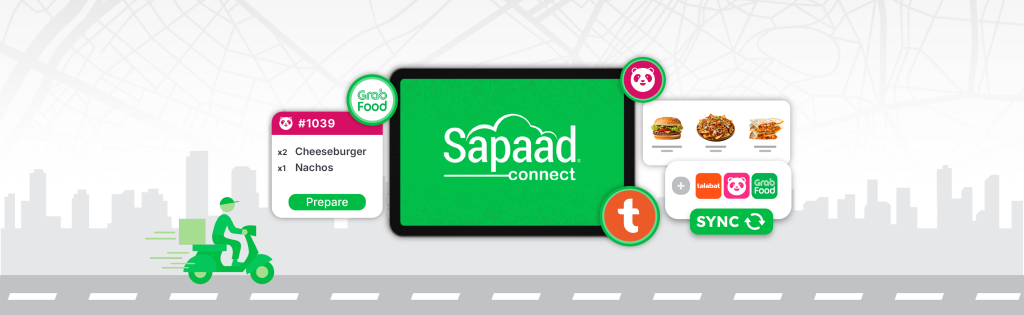
As mentioned, a cloud-based POS system can save you more money because it’s paid on a subscription basis. You can also integrate it with food aggregators and delivery platforms, like Zomato, Grabfood, Deliverect, Talabat, and more. All your online orders can be sent straight to your POS and Kitchen Display System (KDS), streamlining your online ordering and delivery processes further.
With a traditional POS, you would’ve bought different devices for each of those apps just to accept orders. Thanks to a cloud-based POS, you don’t have to do that anymore. Go for an all-in-one cloud-based POS so that you can also enjoy beneficial features and integrations like online ordering, inventory management, electronic invoicing, and convenient payment gateways for your customers.
Simplify Your Operations, Boost Your Working Capital
Using your restaurant’s working capital for these technological upgrades will take your operations to the next level, allowing you to increase customer satisfaction and your restaurant’s liquidity. And as your cash flow improves, the more you will be able to generate working capital from a sizable portion of your sales.
Compare the costs and benefits of investing in restaurant technology. To ensure a wise investment, consider a POS system’s backend as much as its frontend capabilities. The simpler it can make your operations, the more likely it can boost your business’ financial standing.
Mirash T
Author

Related Blog Posts



















Get the latest news and updates
Submit your email address to join our email list.